

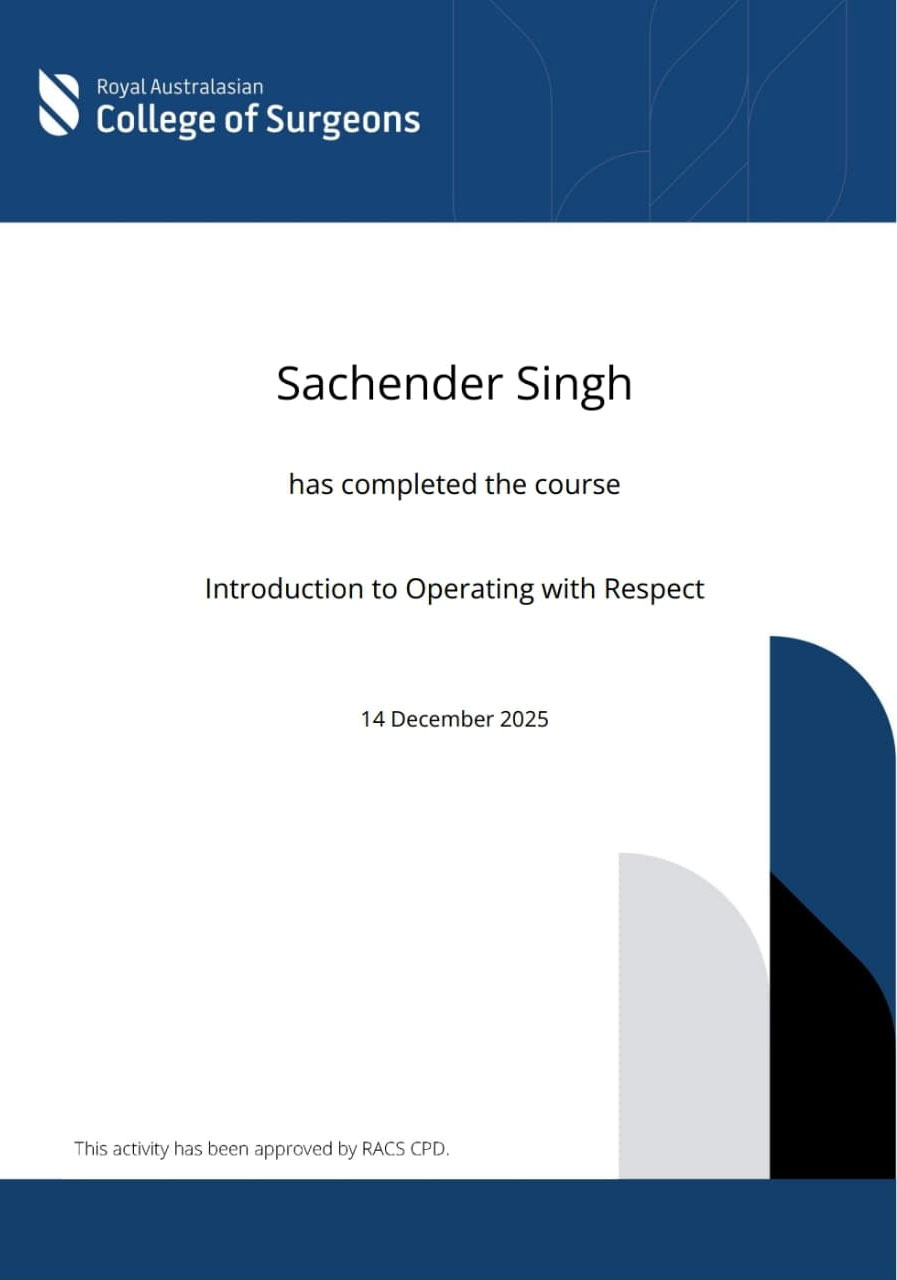
By Dr. Sachender Pal Singh
Consultant Head & Neck Oncosurgeon
In medicine and surgery, we spend years mastering anatomy, procedures, and clinical decision-making. Yet one critical aspect of surgical practice is rarely taught in a structured way — how we behave inside the operating theatre.
As Dr. Sachender Pal Singh, practicing Head & Neck Oncosurgery in India, I have come to realise that technical expertise alone does not define surgical excellence. The culture we create in the operating room plays an equally important role in patient safety, team performance, and long-term outcomes.
Insights by Dr. Sachender Pal Singh
The operating theatre is a high-pressure environment. Decisions are time-critical, complications are unpredictable, and multidisciplinary teams must function seamlessly.
Research from patient-safety organisations worldwide has shown that:
According to Dr. Sachender Pal Singh, respect in the operating room is not about being lenient — it is about ensuring clarity, accountability, and shared responsibility.
Perspective of Dr. Sachender Pal Singh
In the Indian healthcare system, the importance of operating with respect becomes even more pronounced due to:
As Dr. Sachender Pal Singh has observed in daily clinical practice, junior doctors and nursing staff often hesitate to speak up, even when they recognise potential concerns. This hesitation is not due to lack of knowledge, but due to fear of hierarchy.
When communication stops, patient safety suffers.
Explained by Dr. Sachender Pal Singh
Operating with respect is not a slogan. It is reflected in daily actions such as:
As emphasised by Dr. Sachender Pal Singh, these behaviours create psychological safety, which is now recognised as a core principle of high-reliability healthcare systems.
Dr. Sachender Pal Singh on Surgical Culture
When we think of patient safety, we often focus on protocols, technology, and checklists. However, culture is just as important.
A respectful operating environment:
According to Dr. Sachender Pal Singh, respect is not “soft skill” medicine — it is strategic medicine.
Advocated by Dr. Sachender Pal Singh
Leadership, communication, and respectful behaviour should be taught just like any other surgical skill. These are not personality traits — they are trainable competencies.
Many international surgical training systems have already incorporated structured education on operating with respect. Dr. Sachender Pal Singh strongly believes that Indian surgical education must formally integrate these principles to build safer, more sustainable healthcare environments.
From Dr. Sachender Pal Singh
Writing this blog is not about blaming individuals or institutions. It is about reflection and responsibility.
Every surgeon — junior or senior — shapes operating theatre culture through everyday actions. Small behavioural changes can create lasting improvements in patient safety, team morale, and professional longevity.
Respect is not an add-on to surgical skill.
Respect is part of surgical excellence.
Dr. Sachender Pal Singh is a Consultant Head & Neck Oncosurgeon with a strong interest in surgical leadership, patient safety, multidisciplinary care, and improving healthcare culture in India.