

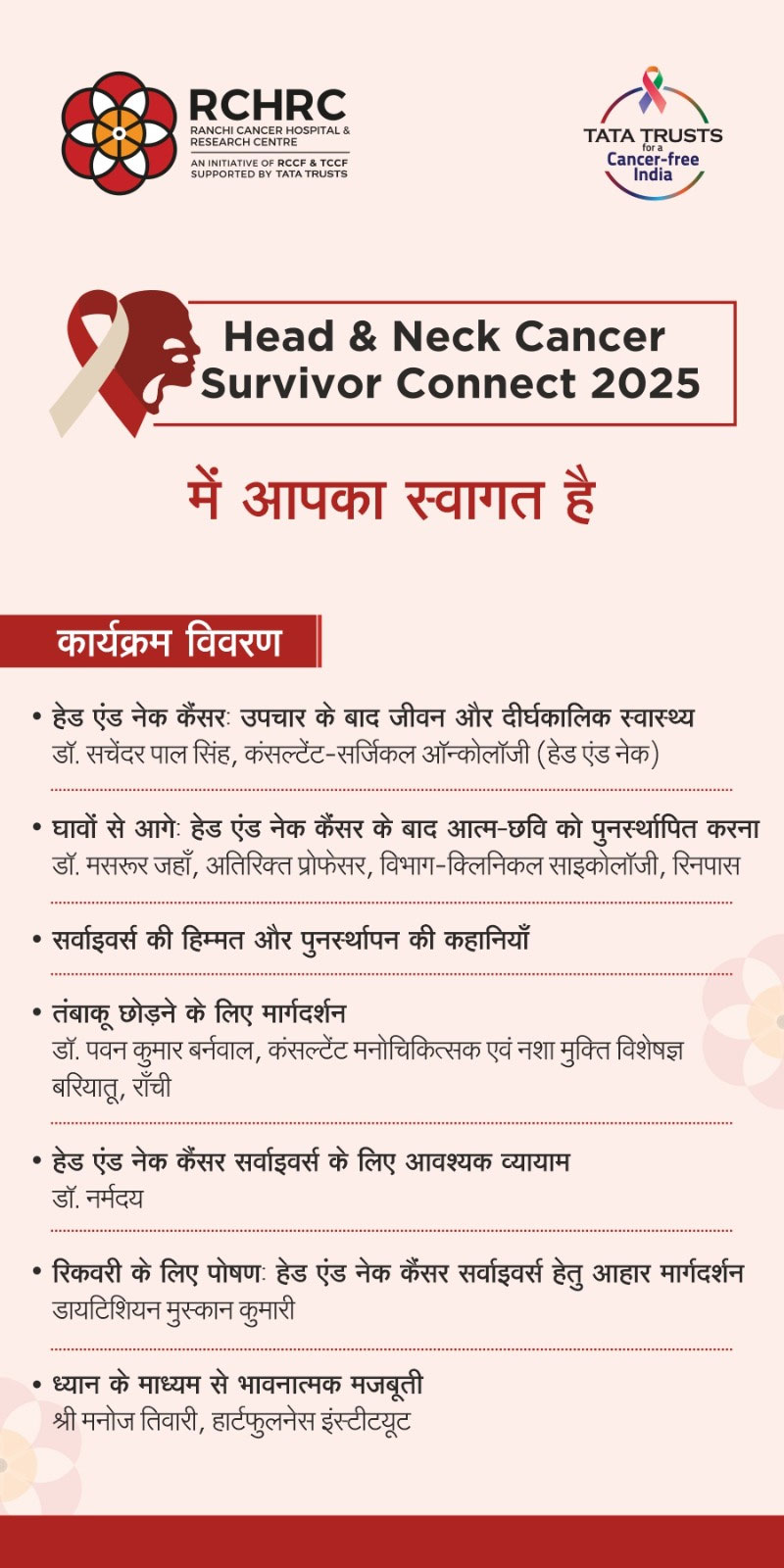
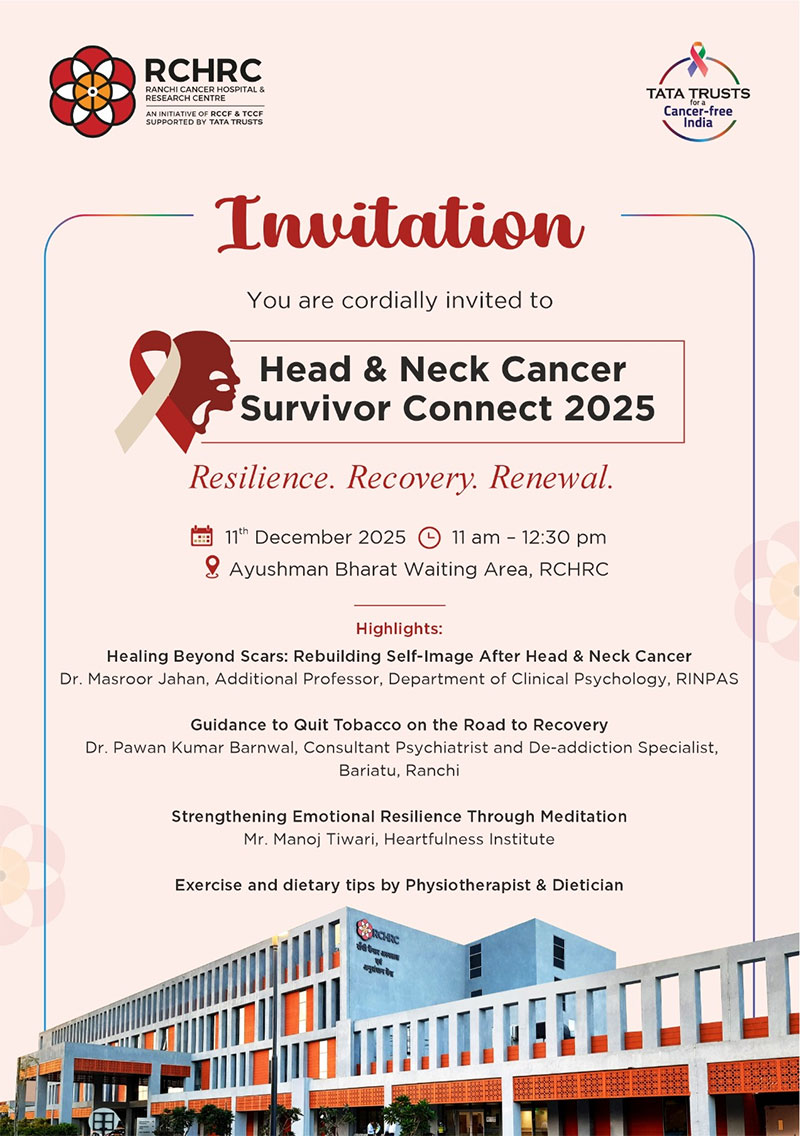
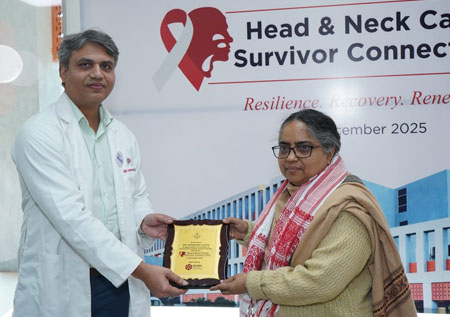
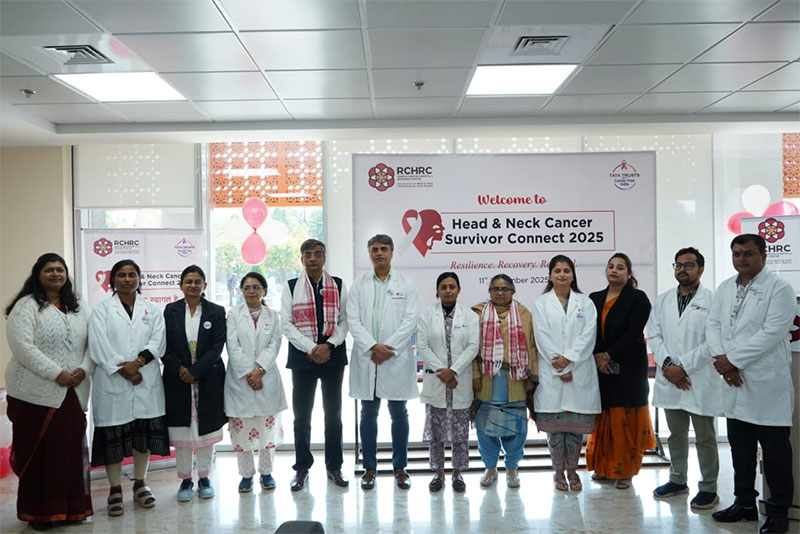
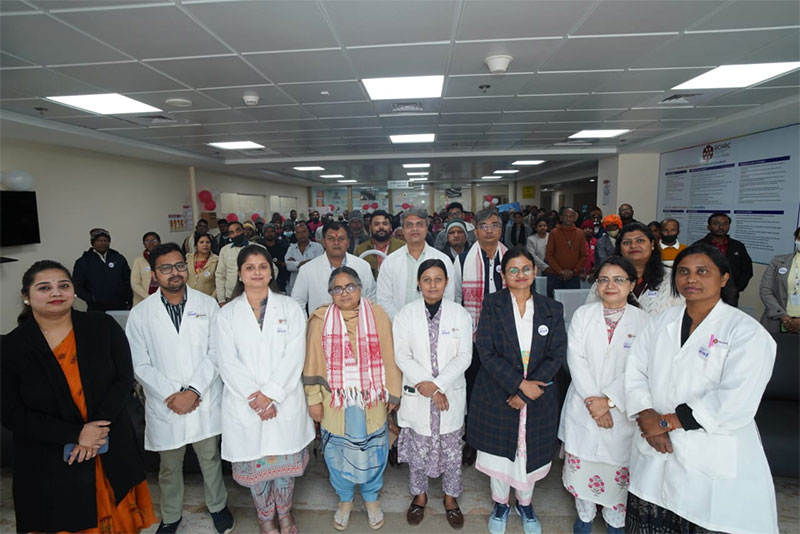
11th December 2025 became a memorable day at Ranchi Cancer Hospital & Research Centre (RCHRC), as more than 120 head & neck cancer survivors and caregivers gathered under one roof to celebrate courage, community, and healing.
Hosted by the Department of Head & Neck Surgical Oncology, the event — “Head & Neck Cancer Survivor Connect 2025” — was a reminder that survivorship is not the end of a journey, but the beginning of a new chapter.
Head & neck cancer survivors face unique challenges long after their treatment ends. Eating, speaking, breathing, and even social confidence can be affected.
Many survivors struggle silently with questions like:
Events like Survivor Connect provide a safe space to ask these questions, meet others who understand the journey, and receive guidance from specialists across disciplines.
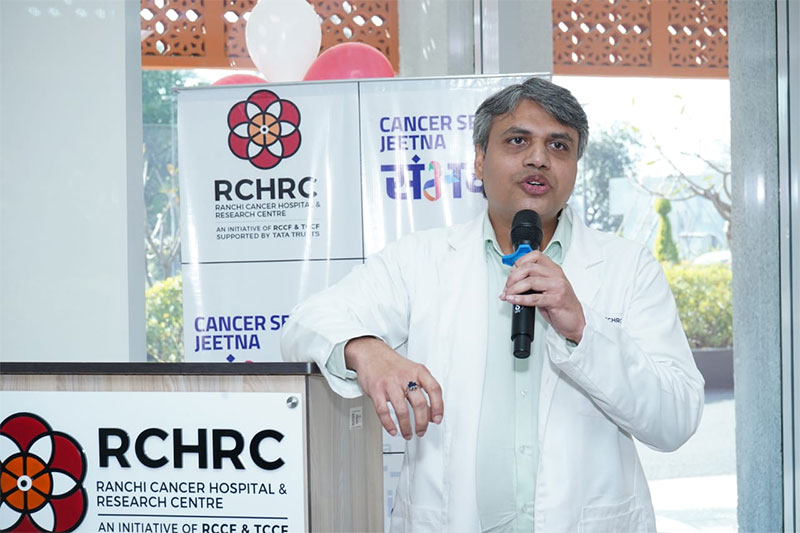
The programme opened with an insightful talk by Dr. Sachender Pal Singh, Consultant – Surgical Oncology (Head & Neck), RCHRC.
He shared a message that touched every heart in the room:
“The end of treatment is not the end of your journey — it is the beginning of rebuilding life with strength and purpose.
Every extra bite you swallow, every extra word you speak, every extra step you take is progress worth celebrating.”
He emphasised the importance of:
Dr. Singh reminded survivors that cancer may have tested them, but it has not taken away their worth, dignity, or future.
Dr. Masroor Jahan, Additional Professor of Clinical Psychology, RINPAS, delivered a powerful session on restoring self-image after head & neck cancer.
“Healing is not about going back to who you were — it is about discovering who you can become now.”
Some of the most moving moments came when survivors shared their personal journeys. Their stories of fear, surgery, rehabilitation, and eventual recovery brought tears to many eyes.
For newly diagnosed patients, these narratives became beacons of hope.
Dr. Pawan Kumar Barnwal, Consultant Psychiatrist & De-addiction Specialist, highlighted the critical importance of quitting tobacco after cancer treatment.
“Quitting tobacco is not just a habit change — it is reclaiming control over your life.”
Physiotherapist Dr. Narmaday guided survivors on essential exercises to improve swallowing, shoulder mobility, speech, and stamina.
Dietitian Muskan Kumari shared practical nutrition tips tailored to survivors who often struggle with altered taste, weight loss, or swallowing difficulties.
Both sessions reinforced a key principle: Healing is a team effort — and survivors should never walk this journey alone.
The event concluded with a calming meditation session by Mr. Manoj Tiwari from the Heartfulness Institute, helping survivors experience emotional grounding, relaxation, and renewed hope.
Survivor Connect 2025 was more than an event — it was a celebration of life.
As we move forward, RCHRC will continue organising support programmes, awareness sessions, and multidisciplinary survivorship initiatives.
Because healing does not stop when cancer treatment ends —
healing begins there.